

Most spaces aren’t designed with neurodivergent people in mind. Bright lights. Crowded rooms. The unspoken expectation to perform and engage on everyone else’s terms. The connection between art and neurodiversity in Hong Kong is starting to change that.
What art adds that education alone can’t
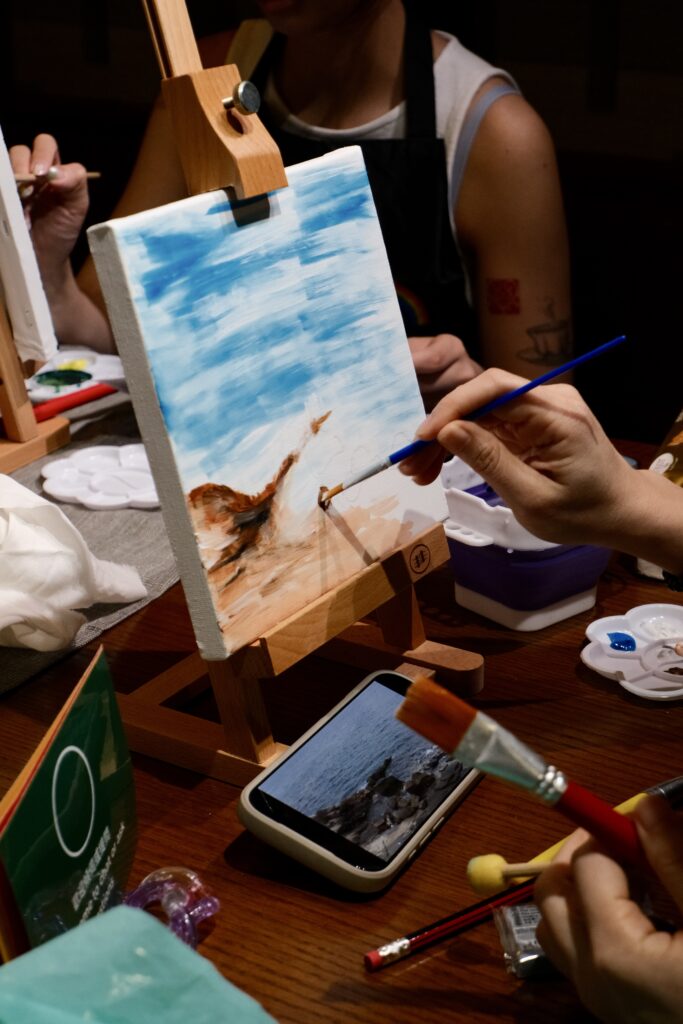
Understanding neurodiversity and experiencing inclusive design are two different things.
Neurodiversity 101 gives you the knowledge — the language, the context, the practical frameworks for making your workplace or school more inclusive. That matters. But there’s a gap between knowing something and actually feeling it.
Art can close that gap. A well-designed creative session puts you inside an inclusive environment rather than just describing one. You notice what it feels like when the room is set up for you. You notice what focus feels like when the sensory load is reduced. That’s harder to communicate in a presentation and easier to carry into how you design spaces going forward.
For neurodivergent participants specifically, it’s an entry point that doesn’t ask them to perform. No speaking on cue. No explaining their experience to a group. Just a prompt, some materials, and a room that’s been set up to actually support them.
The two formats complement each other. Education builds understanding. Creative experience makes it real.
The environment is doing more than you think
Here’s something most people don’t consider: the room itself communicates something before a single word is spoken.
Harsh fluorescent lighting. Ambient chatter. Chairs arranged in rows facing a speaker. These are standard settings in Hong Kong workplaces, schools, and community spaces. They’re also genuinely uncomfortable — sometimes physically — for people with sensory processing differences, ADHD, autism, or anxiety.
Demi Herder, Founder of The Art Bridge Hub Initiative and 2025 Resolve Foundation Fellow, focuses on building accessible, neuro-inclusive creative spaces. Herder calls these “Sanctuary Spaces” — environments intentionally designed to reduce sensory friction. Warm lighting instead of fluorescents. Soft acoustics. A clear, low-pressure structure. Space to create alongside others without being required to interact directly.
The changes aren’t dramatic. But the effect is.
When you reduce sensory load, you free up cognitive capacity. People can focus, create, and connect — instead of spending that energy managing an environment that wasn’t built for them.
As Demi puts it: a world built for the most sensitive is a better world for everyone. That’s not just a feel-good principle. It’s a practical design insight that applies to offices, classrooms, and community spaces across Hong Kong.
Parallel Play and why it works
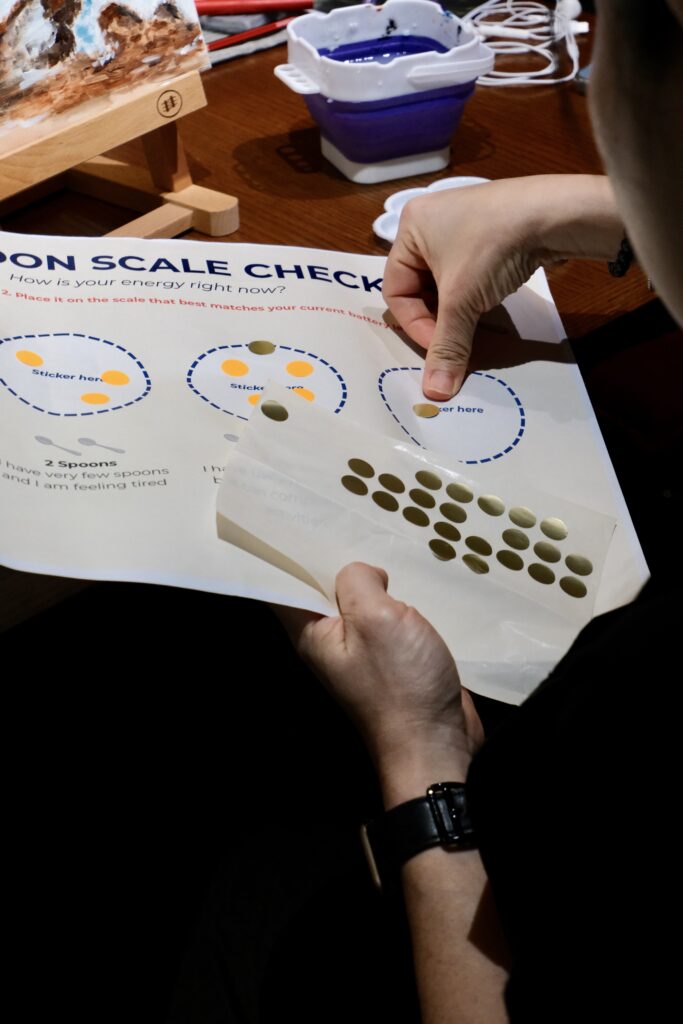
One of the concepts at the heart of sensory-sensitive creative spaces is Parallel Play — a term borrowed from child development that describes being in a shared space, doing a similar activity, without the pressure of direct interaction.
It sounds simple. For many neurodivergent people, it’s a revelation.
Parallel Play creates the conditions for genuine participation without requiring social performance. You’re present. You’re contributing. You’re connected to the people around you — just not in a way that demands constant eye contact, back-and-forth conversation, or the social navigation that drains energy fast.
Creative workshops built around this model — where participants work on their own piece, in their own way, in a space that’s been set up to support focus — create room for neurodivergent people to actually show up as themselves.
That’s what inclusion looks like in practice. Not just an open door, but a room worth walking into.
Art and neurodiversity in Hong Kong: what it means for organizations
The conversation around art and neurodiversity in Hong Kong is growing — but the physical and cultural design of most environments hasn’t caught up. If you run a school, a company, or a community organization, the way you design your spaces and programs is already making a statement about who they’re for.
Neurodivergent people make up an estimated 15–20% of the population. In Hong Kong, awareness of neurodiversity is growing — but the physical and cultural design of most environments hasn’t caught up.
The good news: the changes that make spaces more accessible for neurodivergent people tend to make them better for everyone. Quieter rooms, clearer communication, reduced sensory clutter. These aren’t specialist accommodations — they’re good design.
Art is one way in. A sensory-aware creative session can be a genuinely powerful entry point for teams, students, or communities starting to engage with neurodiversity — because it demonstrates inclusion rather than just describing it.
Want to bring neurodiversity awareness to your organization?
At Talos Foundation, we run Neurodiversity 101 — a practical session for schools, corporates, and organizations in Hong Kong that builds real understanding and usable skills around neurodiversity.
If you’re interested in how we can work together — including through creative formats — get in touch.
Talos Foundation is a Hong Kong-based non-profit focused on neurodiversity awareness and inclusion. We run workshops, distribute awareness lanyards, and work with partners across HK to build a more neurodivergent-friendly city.