
A 2025 study led by the Chinese University of Hong Kong found that 2.57% of children and youths aged 6 to 17 in Hong Kong are autistic — a rate similar to the US, UK, and Australia. Autism isn’t rare here. It’s underdiagnosed.
Hong Kong’s Census and Statistics Department recorded around 10,200 people with autism in its 2013 household survey. Local service organisations estimate the real number at 118,000 to 130,000 — over ten times the official count. Most autistic people in Hong Kong don’t have a diagnosis, don’t have support, and often don’t have anyone around them who understands why certain things are harder than they should be.
That’s the gap awareness needs to close.
Wong OWH, Chan SSM, Chau SWH, et al. “Autism epidemiology in Hong Kong children and youths aged 6–17: Implications on autism screening and sex differences in the community.” Autism: The International Journal of Research and Practice, 2025.
What autism awareness actually means
Autism awareness isn’t about knowing the word “autism.” Most people do. It’s about recognising what autism looks like day to day — in a classroom, a job interview, an office, a family dinner. It’s noise sensitivity mistaken for rudeness. Directness mistaken for coldness. A need for routine mistaken for inflexibility.
Real awareness means the parent who suspects something isn’t “overreacting.” The teacher who notices a student struggling knows what to do next. The manager who interviews an autistic candidate doesn’t mistake different communication style for poor fit. None of that requires expertise. It requires accurate information, which is exactly where Hong Kong is still catching up.
Where the gaps show up
In schools. Hong Kong’s mainstream schools often lack the trained staff and resources to support autistic students properly, according to local special-needs advocates. That means some autistic children get diagnosed late, or not at all, simply because nobody in the classroom recognized the signs.
In workplaces. Autistic adults in Hong Kong report having to hide traits at work to avoid being seen as difficult. Parents of autistic children often scale back their careers because employers don’t understand why their child needs sudden, immediate support. Basic flexibility — not major accommodation — is often all it would take.
In general public understanding. Hong Kong’s official ASD prevalence rate rose from 0.1% in 2013 to 0.3% in 2020, according to government household survey data. That’s not a sign autism is becoming more common. It’s a sign more people are finally being recognized and diagnosed. Awareness moves the number, not autism itself.
Autism awareness is part of a bigger picture
Autism is one form of neurodivergence, not the only one. ADHD, dyslexia, and other hidden disabilities follow a similar pattern in Hong Kong: real, common, and rarely recognised until someone knows what to look for. Growing ADHD awareness in Hong Kong and growing autism awareness in Hong Kong go hand in hand — the same lack of training in schools and workplaces affects both. That’s why we treat neurodiversity in Hong Kong as one connected issue rather than a list of separate conditions, and why our sessions cover the full picture instead of a single diagnosis.
This also explains why hidden disability awareness in Hong Kong matters as much as visible disability access. You can’t always see that someone is autistic, has ADHD, or processes sensory information differently. Lanyards exist for exactly that reason — to make an invisible difference visible when someone chooses to signal it.
What Talos Foundation is doing about it
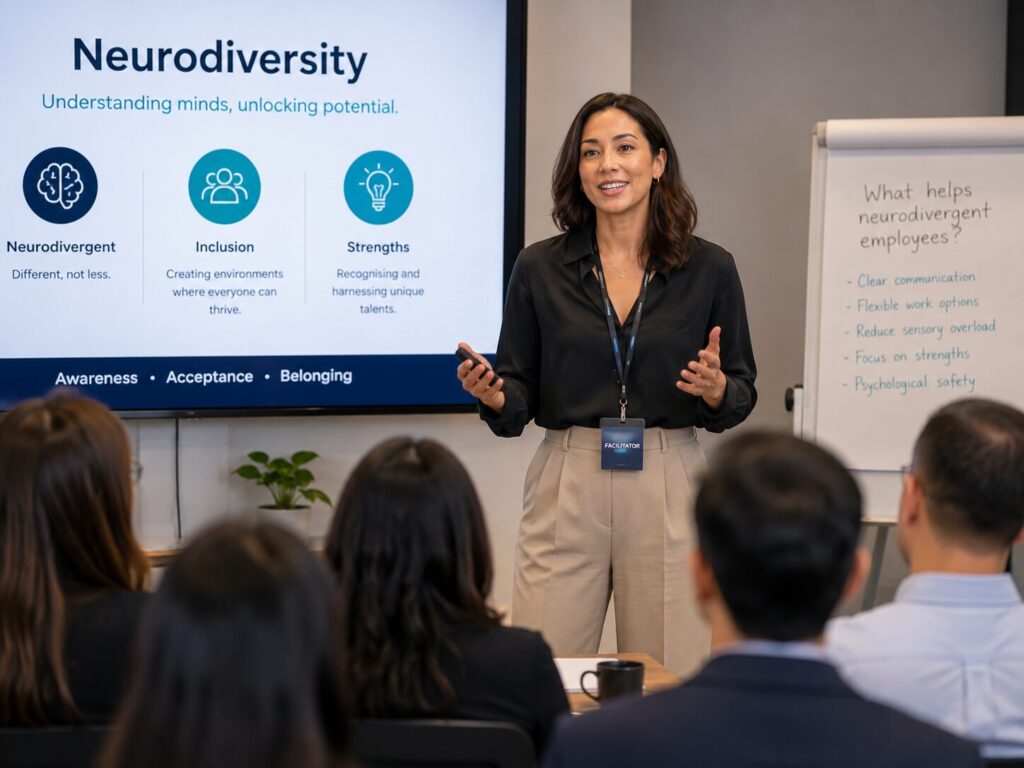
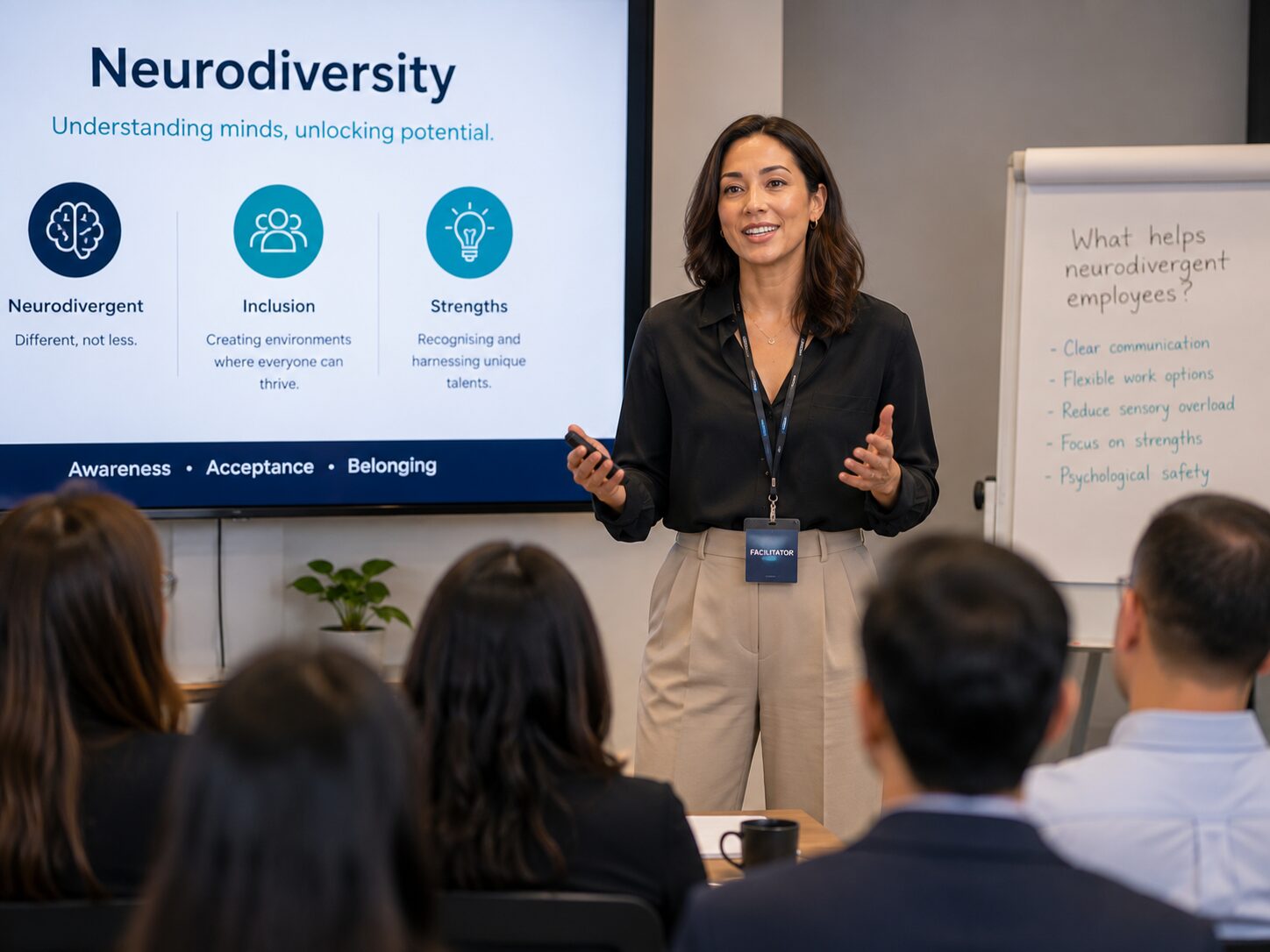
This is the exact gap our Neurodiversity 101 workshop is built to close. We run it for schools, corporates, and organisations across Hong Kong — plain-language sessions that explain what neurodivergence actually looks like, and what small, practical changes make the biggest difference.
We also run a free awareness lanyard and button program, distributed through partner outlets across the city. The lanyard is a quiet, simple signal — it tells the people around you that you might need a bit more patience, time, or space, without requiring you to explain why.
Both exist for the same reason: most of the barriers autistic people in Hong Kong face aren’t about severity. They’re about the people around them not knowing what they’re looking at.

What you can do
If you run a school, a company, or an organization in Hong Kong, book a Neurodiversity 101 session for your team. If you run a shop, clinic, or public-facing outlet, get in touch about becoming a lanyard distribution point. And if you just want to understand more, follow us — we post practical, no-nonsense content on autism and neurodiversity awareness in Hong Kong all year round.
The diagnosis gap won’t close through good intentions. It closes when more people know what they’re looking at.