How Talos Foundation’s Free Lanyard Programme Works
An awareness overview for parents, schools, and employers — without the jargon.
Learning disability in Hong Kong is more common than many people realise — and more misunderstood than it should be. The term covers a range of conditions that affect how someone acquires, processes, or retains information. It has nothing to do with intelligence or potential. It is simply a different route to learning.
This post is a starting point for anyone who wants to understand more — parents, teachers, employers, or anyone who supports a neurodivergent person in their life.
What a learning disability generally refers to
When people talk about learning disability in Hong Kong, they’re usually referring to conditions that make certain types of information processing harder — not impossible.
Conditions commonly grouped under this term include:
- Dyslexia — often associated with reading, writing, and spelling
- Dyscalculia — often associated with numerical reasoning and arithmetic
- Dyspraxia (Developmental Coordination Disorder) — often associated with motor coordination and organisation
- Auditory Processing Disorder — associated with how the brain interprets sound
These conditions often overlap with ADHD or autism. Definitions vary, and a qualified professional — not a blog post — is the right starting point for any formal understanding. What we can offer here is a general introduction.
Signs that sometimes prompt families to seek support
Everyone learns differently, and no single sign points definitively to a learning disability in Hong Kong or anywhere else. That said, families and teachers sometimes notice patterns worth looking into:
- Difficulty remembering sequences — letters, numbers, verbal instructions
- Inconsistent performance: confident verbally, but struggling on paper
- Slow reading speed despite effort and practice
- Difficulty with phonics, rhyming, or connecting letters to sounds
- Challenges with organisation, planning, or following multi-step tasks
- Noticeably avoiding reading or writing compared to other activities
If you recognise a persistent pattern across different settings over time, it’s worth speaking to your child’s school or a qualified professional about next steps. We’re not able to advise on individual cases — but we can point you in the right direction.
Finding support in Hong Kong
For families navigating learning disability in Hong Kong, the Education Bureau’s Student Support Section is a key resource. Assessments are typically conducted by educational psychologists, either through school referrals or privately.
Waiting times and availability vary. Your child’s school is usually the best first point of contact — they can advise on the referral process and what’s available locally. For the most up-to-date information on public services, the Education Bureau website is the right place to check.
What good school support can look like
Support for students with learning disabilities in mainstream schools in Hong Kong varies between institutions. At its best, it tends to involve:
- Clear learning support plans with specific goals
- Adjustments to how content is delivered — not necessarily to what’s expected
- Regular communication between teachers, learning support staff, and parents
- Accommodations in assessments where appropriate
These are general patterns, not guarantees. Every school and every student is different. The right support looks different depending on the individual — another reason why speaking to a professional matters.
What Talos Foundation does
Talos Foundation raises awareness of neurodiversity and learning differences across Hong Kong. We work with schools and organizations to help build understanding — and we’re always clear that awareness is where we start, not where expertise ends. We are not clinicians, psychologists, or diagnosticians.
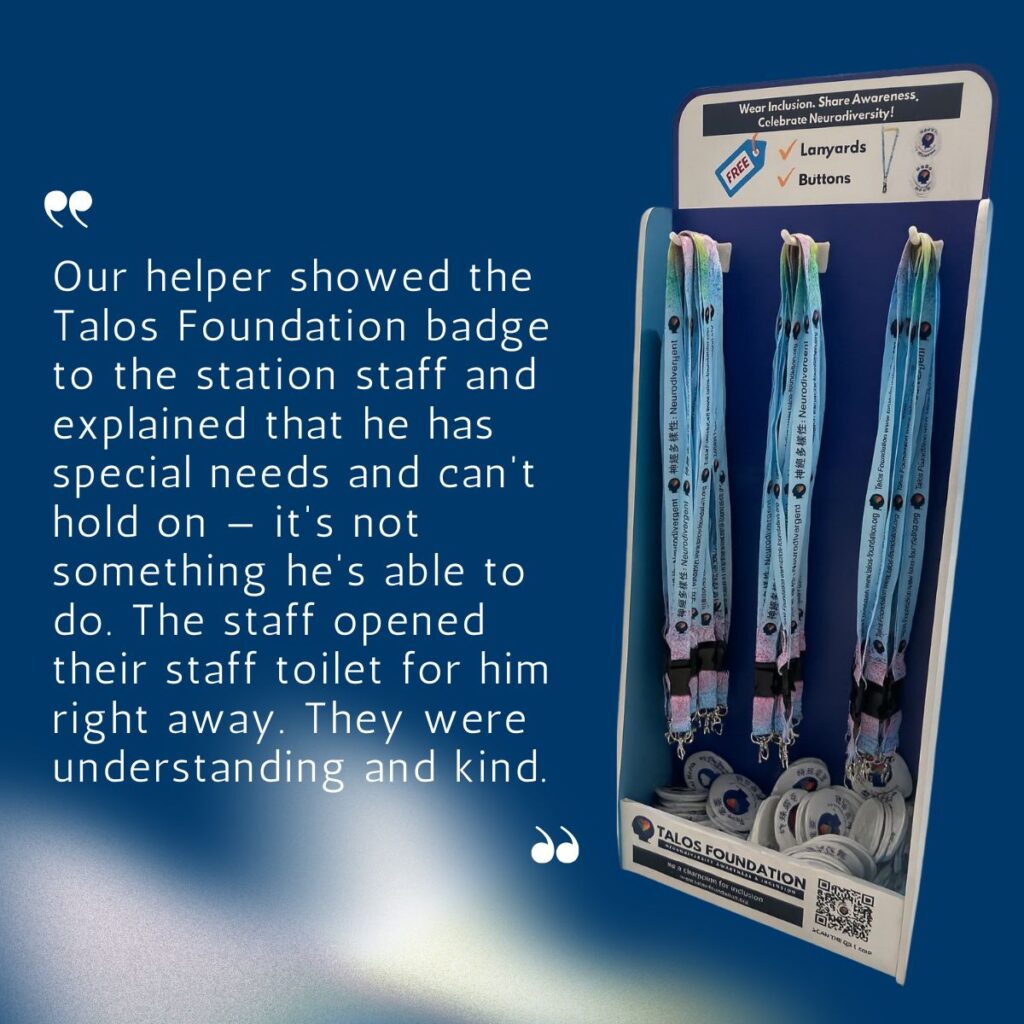
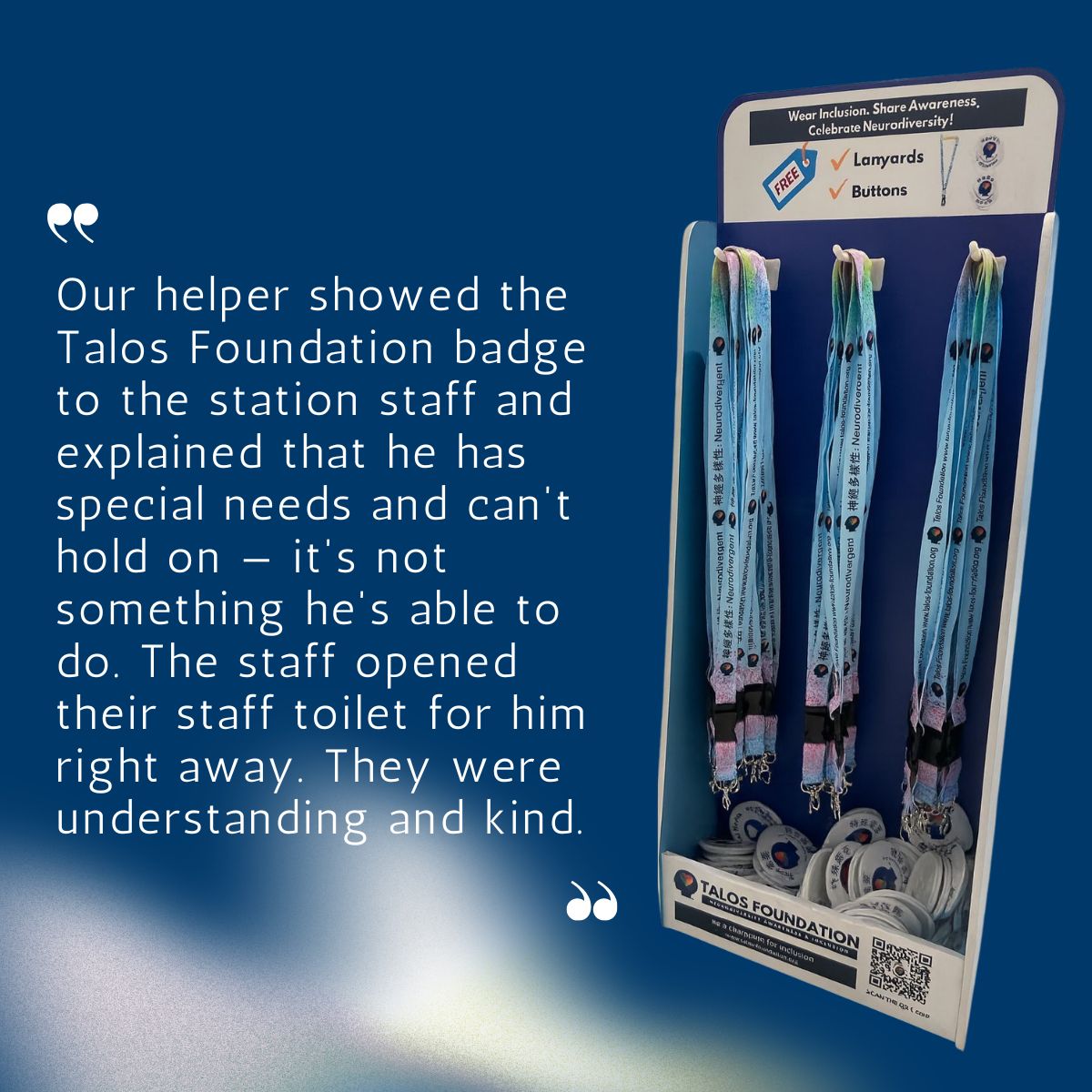
We distribute free lanyards and neurodiversity awareness buttons so that neurodivergent people can signal their needs without explanation. Over 20,000 distributed across Hong Kong.
We’re also producing Invisible Differences — Hong Kong’s first animated short film built from real interviews with neurodivergent Hongkongers. Learn more about Talos Foundation.