Most companies talk about inclusion.
Fewer talk about neurodiversity.
And that’s the gap.
When we discuss diversity at work, we often focus on what we can see — gender, race, background. But neurodiversity in the workplace is often overlooked, even though it shapes how people think, communicate, process information, and perform.
At Talos Foundation, we see this every day. Brilliant, capable individuals navigating systems that were never designed with them in mind.
If inclusion is the goal, we can’t ignore the way different brains experience work.

What is the inclusion gap?
The inclusion gap shows up quietly.
It’s the employee who struggles in open-plan offices because of sensory overload.
It’s the candidate who performs poorly in a fast-paced panel interview — but would excel in the role.
It’s the team member labeled “difficult” when they simply communicate differently.
Without neurodiversity training, workplaces default to one communication style, one productivity style, one leadership style.
That’s not inclusion. That’s uniformity.
Why Neurodiversity training matters
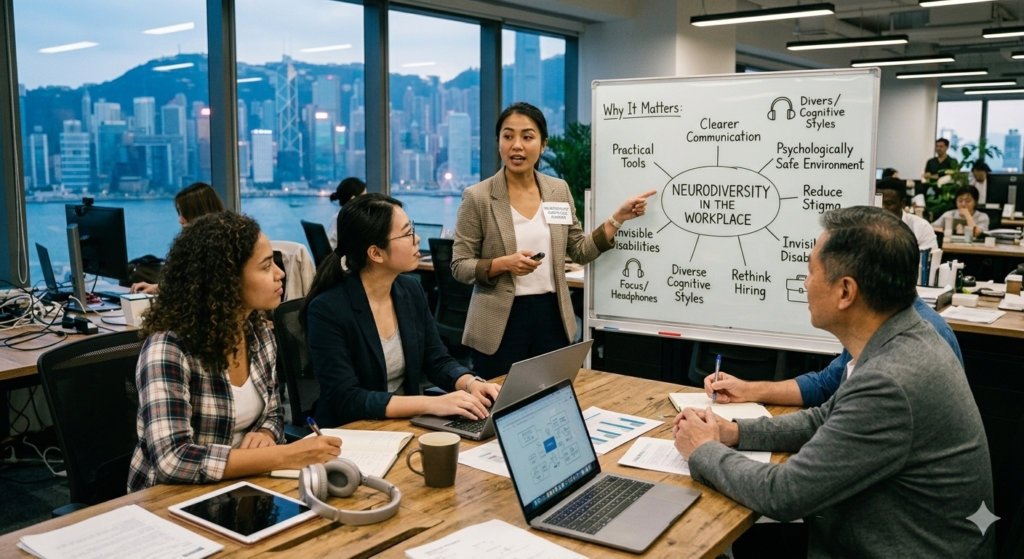
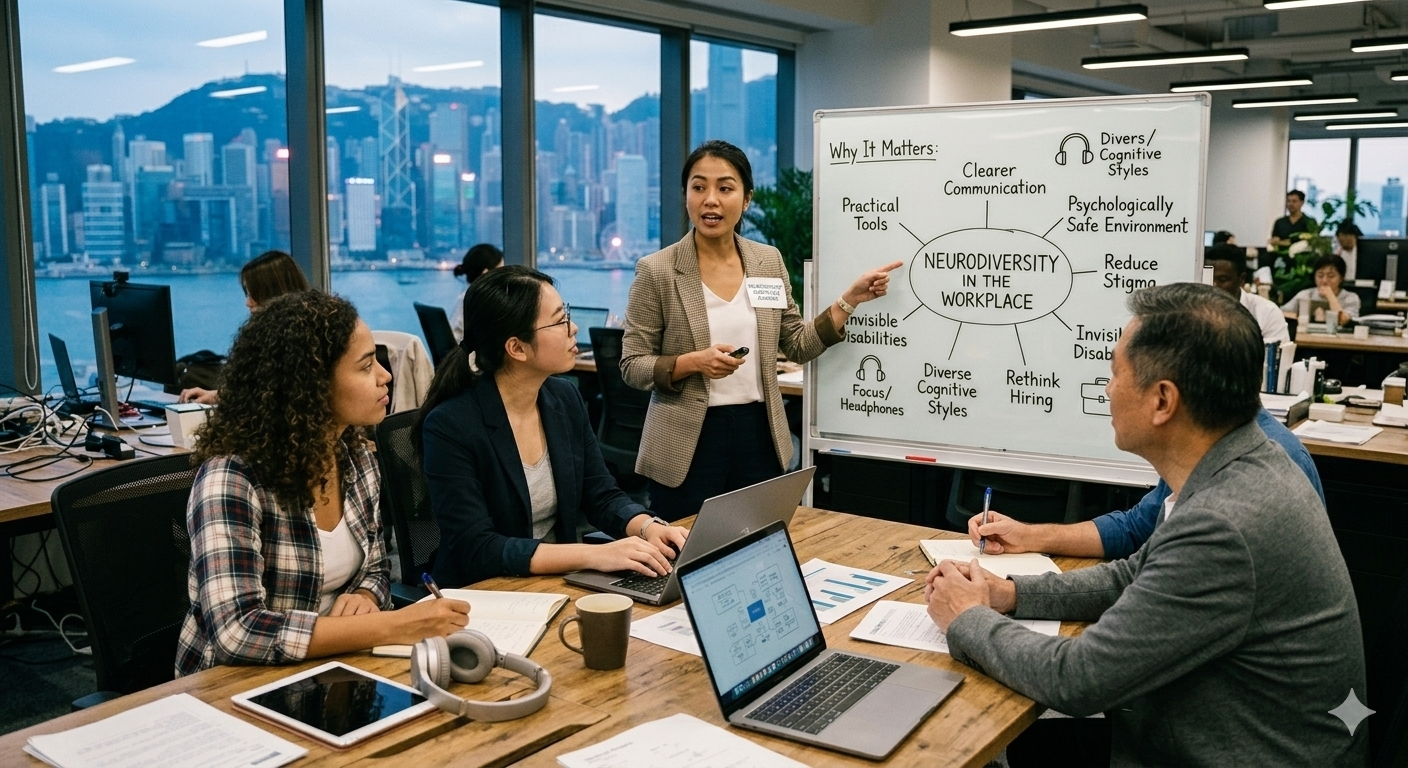
Real inclusion training goes beyond being kind or well-meaning. It equips teams with practical tools to understand and support diverse cognitive styles.
Through Talos Foundation’s corporate workshops and training sessions, organizations learn to:
• Understand what neurodiversity actually means
• Reduce stigma around invisible disabilities
• Build clearer communication systems
• Create psychologically safe environments
• Rethink hiring and onboarding processes
This is how we start creating inclusive workplaces through training — not through slogans.
Inclusion isn’t just Social. It’s Strategic.
Neurodivergent individuals often bring strengths that organizations actively look for: creativity, pattern recognition, hyperfocus, innovation, and unconventional problem-solving.
But those strengths only show up when the environment allows them to.
Investing in workplace neurodiversity training doesn’t lower standards. It removes unnecessary barriers so people can perform at their best.
That’s smart leadership.
That’s sustainable growth.
That’s real inclusion.
What Talos Foundation is doing about it
At Talos Foundation, we combine awareness, education, and practical support.
We:
• Deliver neurodiversity and inclusive leadership training for corporations and schools
• Partner with employers to open up meaningful job opportunities
• Distribute free lanyards, pins, and buttons across Hong Kong to support individuals with invisible disabilities
• Host community events and conversations that normalize neurodiversity
Inclusion doesn’t happen in isolation. It happens when workplaces, communities, and leadership move together.
The future of work is Neurodiverse
Here’s the reality: neurodiversity has always existed.
The question is whether workplaces will continue designing systems for one type of brain — or evolve.
Closing the inclusion gap means recognizing that different minds are not problems to fix. They are strengths to understand.
If your organization is serious about building an inclusive workplace culture, neurodiversity training isn’t optional. It’s foundational.
Because inclusion isn’t about fitting people into the system.
It’s about building systems where every mind can thrive.
To learn more about Talos Foundation’s workplace training programs and initiatives, visit talos-foundation.org and start the conversation.